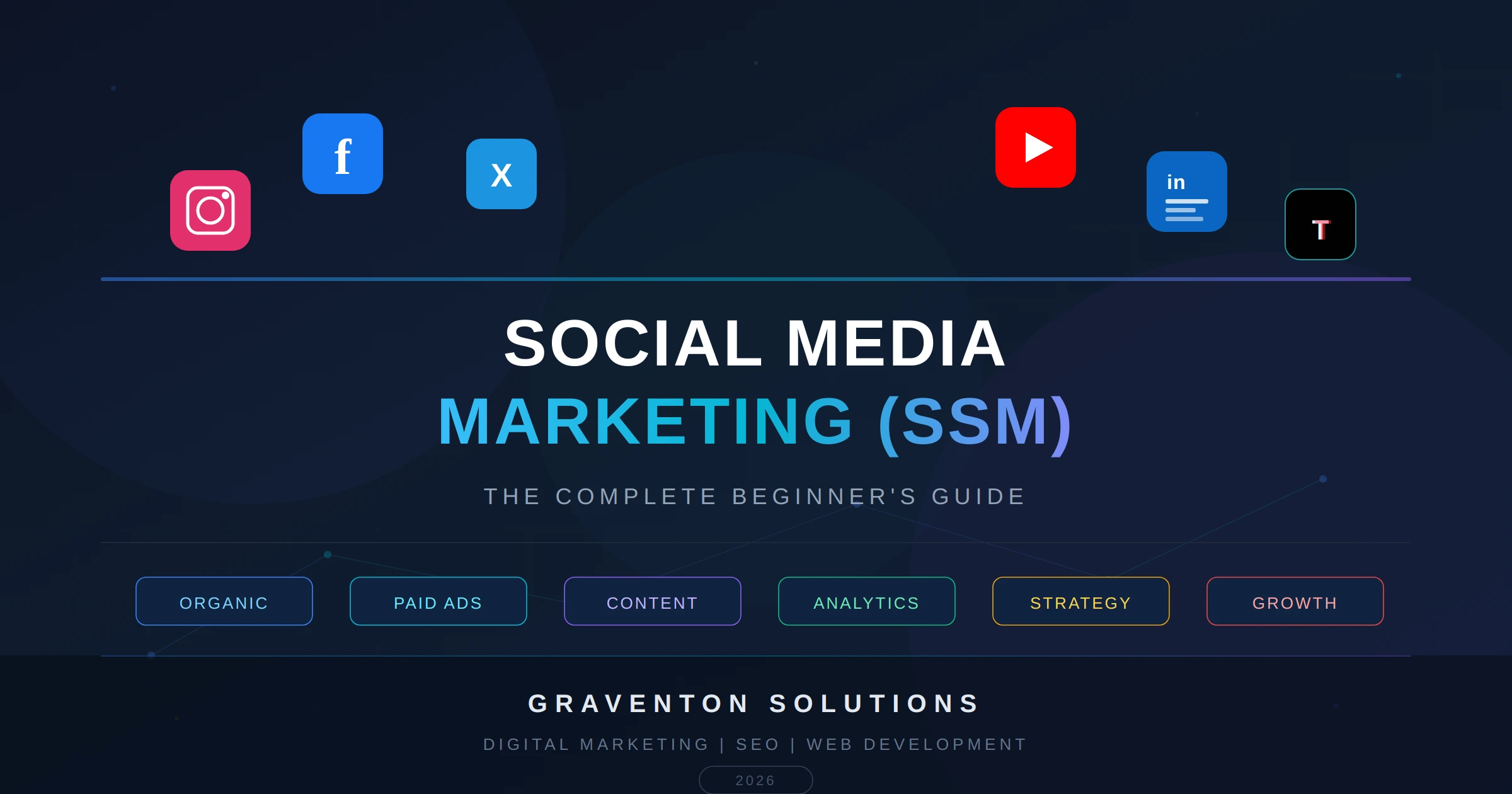
Today, your customers are not searching for you on Google first — they’re finding you on social media.
Think about it. When was the last time you discovred a new brand or product? Chances are, it wasnt from a TV ad or a newspaper. It was probably while you were scrolling Instagram at 11 PM, or watching YouTube shorts, or randomly clicking on a Facebook post.
Thats the power of social media. And thats exactly why social media marketing — or SSM — has become one of the most important skills in the business world right now.
Whether you’re a startup founder, a small business owner, or just someone trying to understand how this whole online marketing thing works — this blog is for you. We’re going to break down everything about SSM in the simplest way possible.
No fancy marketing words. No confusing theories. Just straight up, easy to understand stuff.
Lets dive in.
What is Social Media Marketing (SSM)?
Social Media Marketing is basically using platforms like Instagram, Facebook, LinkedIn, YouTube, and Twitter to promote your brand, sell your products or services, connect with your audience, and grow your business.
Thats it. Thats the core idea.
When a clothing brand posts a reel on Instagram showing their new collection — thats SSM. When a tech company runs LinkedIn ads to get leads — thats SSM. When a restuarant shares mouth-watering food photos on Facebook — also SSM.
Its all about being where your audience already hangs out and putting your brand in front of them in a way that feels natural, not forced.
And look at the numbers — there are over 5 billion social media users worldwide in 2026. Five billion. Thats more than half the planet. Your potential customers are literally scrolling right now as you read this. The question is — are they seeing YOUR brand or your competiors?
Agar aapke customers social media pe hain aur aap nahi, toh you’re leaving money on the table. Plain and simple.
Key Social Media Platforms You Need to Know
Not every platform is the same. Each one has its own vibe, its own audience, and its own strengths. Let me break them down for you.
Instagram is the king of visual content right now. If your brand looks good — clothes, food, travel, fitness, beauty, lifestyle — Instagram is where you need to be.
Reels are absolutely dominating right now. Short, catchy videos that grab attention in the first 2 seconds. Stories keep your audience engaged daily. And carousel posts are great for sharing tips and information that people actually save and share.
Instagram works amazingly well for both building brand awareness and driving actual sales. Many businesses today make most of thier revenue directly from Instagram.
A lot of people think Facebook is dead. Its not. Far from it actually.
Facebook still has the largest user base of any social media platform. And more importantly, its ad platform (Meta Ads) is one of the most powerfull advertising tools ever created. The targeting options are insane — you can target people by age, location, intrests, behaviours, job titles, and so much more.
For businesses targeting a wider audience — especially people above 25-30 years old — Facebook is still extremely relevent. Plus, Facebook Groups are great for building community around your brand.
If your business is B2B (business to business), LinkedIn is your playground.
LinkedIn is where professionals hang out. Decision makers, CEOs, managers, HR heads — they’re all on LinkedIn. So if you sell services to other businesses, LinkedIn marketing should be your top priority.
The content that works on LinkedIn is diffrent from Instagram. Here its more about industry insights, thought leadership, case studies, and profesional updates. Its less flashy, more substance. And LinkedIn Ads, while expesive compared to Facebook, can generate very high-quality business leads.
YouTube
YouTube is the worlds second largest search engine. Read that again.
People dont just go to YouTube for entertainment. They go there to learn, to research products, to find solutions. “How to” videos, product reviews, tutorials — this type of content gets millions of views every single day.
If you can create helpfull video content related to your business, YouTube can become a massive source of traffic and trust for your brand. And the best part? YouTube videos have a long shelf life. A video you post today can keep getting views for years.
Twitter (X)
Twitter — or X as its called now — is all about real-time conversation.
Breaking news, trending topics, hot takes, quick updates — thats what Twitter is for. Its great for brands that want to be part of ongoing conversations and show some personality.
Customer service is big on Twitter too. Many companies use it to respond to customer complaints and questions quickly. Its fast, its public, and it shows that you care about your customers.
Types of Social Media Marketing
SSM isnt just about posting pretty pictures. There are diffrent ways to do social media marketing, and each one serves a different purpose.
Organic Marketing
This is the free stuff. Creating posts, sharing reels, writing captions, posting stories — all without paying any money to the platform. You just create good content and put it out there.
Organic marketing is slow but its the foundation of everything. It builds your brands identity, creates trust with your audience, and gives people a reason to follow you. Without a strong organic presense, even your paid ads wont work as well.
The downside? Organic reach has dropped a lot over the years. Platforms want you to pay for reach. So relying only on organic marketing is tough in 2026. You need to combine it with paid efforts.
Paid Ads
This is where you spend money to reach more people. Meta Ads (Facebook and Instagram), LinkedIn Ads, YouTube Ads, Twitter Ads — all of these platforms let you pay to show your content to a specific audience.
Paid ads give you speed and scale. You can reach thousands of people in a single day. But you need a proper strategy. Without knowing who your target audience is, what creative to show them, and where to send them after they click — you’ll just waste money.
More on this later in the blog.
Influencer Marketing
This has become absolutely huge in the last few years.
Influencer marketing is when you partner with someone who has a big or engaged following on social media, and they promote your product or service to thier audience.
It works because people trust reccomendations from people they follow. If a fitness influencer with 500K followers talks about your protein brand, thier audience is much more likely to buy it compared to seeing a random ad.
You dont always need big celebrities either. Micro-influencers (people with 10K-50K followers) often have better engagement rates and cost way less. Many small businesses are seeing great results with micro-influencer partnerships.
Content Marketing on Social Media
This is about creating valuable content that educates, entertains, or inspires your audience — rather than just selling to them all the time.
Think about brands that share useful tips, funny memes, behind-the-scenes content, or customer stories. They’re not constantly saying “buy our product.” They’re giving you something first, and building a relationship. Then when they do promote somthing, you actually care.
Content marketing on social media is all about playing the long game. Give value first, sell later.
Community Management
This one is often overlooked but its really important.
Community management means actively engaging with your audience. Replying to comments, responding to DMs, participating in conversations, addressing complaints, thanking people for positive feedback.
Social media is a two-way street. You cant just post content and disapear. You need to actually talk to your audience. The brands that do this well build incredibly loyal customer bases.
Benefits of Social Media Marketing
Alright, so why should you actually invest time and money into SSM? Here’s why.
Brand Awareness. The more people see your brand on social media, the more they remember you. Even if they dont buy today, when they need what you sell tomorrow, your name is the first thing that pops into thier head. Thats the power of consistant visibility.
Increased Website Traffic. Social media is one of the biggest sources of website traffic for many businesses. A well-placed link in your bio, a swipe-up story, a YouTube description — all of these drive people from social media to your website where they can buy, sign up, or learn more.
Lead Generation. Especially on platforms like LinkedIn and Facebook, you can generate high-quality leads directly through social media. Lead forms, DM conversations, landing page clicks — there are multiple ways to capture potential customers.
Customer Engagement. Unlike traditional marketing where you talk AT people, social media lets you talk WITH them. You can understand what your customers want, what they like, what they complain about, and use all of that to improve your business.
Cost Effective. Compared to running TV ads or newspaper ads, social media marketing is ridiculously affordable. You can start with as little as a few hundred rupees a day and still see real results. For startups and small businesses, this is a game changer.
How SSM Actually Works (Step by Step)
Let me walk you through how social media marketing works in practice. Think of this as your simple roadmap.
Step 1: Define Your Goals. What do you want from social media? More followers? More website visits? More sales? More brand recognition? You need to know what your goal is before you start. Otherwise you’re just posting randomly and hoping something sticks.
Step 2: Identify Your Target Audience. Who are you trying to reach? What age group? What location? What are thier interests? The more specific you are about who your ideal customer is, the better your content and ads will perform.
Step 3: Choose the Right Platform. You dont need to be on every platform. If you sell fashion, Instagram is your best bet. If you sell software to businesses, LinkedIn makes more sense. Go where your audience already is.
Step 4: Create a Content Strategy. Decide what kind of content you’ll post, how often you’ll post, and what message you want to communicate. This is where a content calender comes in — it keeps you organized and consistant.
Step 5: Post Consistently. This is where most people fail. They post actively for a week, then disapear for a month. Social media rewards consistency. Show up regularly, and the algorithm will reward you with more reach.
Step 6: Run Paid Ads. Once you have some organic content going, boost it with paid ads. Even a small budget can significantly incrase your reach and results.
Step 7: Analyze Your Performance. Check your metrics. Whats working? Whats not? Which posts got the most engagement? Which ads drove the most clicks? Use this data to improve your strategy every week.
Rinse and repeat. Thats how you grow on social media.
Content Strategy in SSM
Content is the backbone of social media marketing. Without good content, nothing else matters. So lets talk about what kind of content works in 2026.
Reels and Shorts
Short-form video is king right now. Instagram Reels, YouTube Shorts, TikTok — these short, punchy videos get the most reach and engagement by far.
The key is to hook people in the first 1-2 seconds. If you dont grab thier attention immediately, they’ll just scroll past. Keep it fast, keep it intresting, and always have a clear point or message.
Carousels
Carousel posts (the ones you swipe through) are amazing for educational content. Tips, step-by-step guides, comparisons, lists — carousels work really well on Instagram and LinkedIn.
People love saving carousels for later, which tells the algorithm that your content is valuable. More saves = more reach. Its a beautiful cycle.
Stories
Stories are great for daily engagement. Behind-the-scenes content, quick polls, Q&A sessions, customer testimonials, flash sales — stories keep you top of mind without clogging up people’s feeds.
They only last 24 hours (unless you save them to highlights), which creates a sense of urgency too.
Live Videos
Going live is one of the best ways to build a real connection with your audience. Product launches, AMA (ask me anything) sessions, live tutorials, event coverage — live videos feel raw and authenic, which people appreciate.
Plus, platforms love live content and often give it extra reach.
The Power of Storytelling
This is something many businesses get wrong. They just post about thier product features and prices. Boring.
What actually works is storytelling. Share your journey. Talk about the problems you’re solving. Show customer transformations. Tell real stories. People connect with stories, not sales pitches.
A post that says “Our shoes are 50% off” is fine. But a post that says “This is how our shoes helped a marathoner run her first 42km after recovering from an injury” — thats what people remember and share.
Content Calendar
Planning your content in advance saves you a ton of stress and keeps you consistant. A simple content calender — even just a spreadsheet — where you plan what to post each day or week can make a huge diffrence.
Decide your themes for each day. Maybe Monday is tips, Wednesday is behind-the-scenes, Friday is a reel. Having a structure means you’re never scrambling for ideas at the last minute.
Important SSM Metrics (KPIs)
How do you know if your social media marketing is actually working? You look at the numbers. Here are the key ones you should track.
Engagement Rate — This measures how much people interact with your content. Likes, comments, shares, saves — all of that. A high engagement rate means people actually care about what you’re posting. If your engagement is low, your content needs work.
Reach and Impressions — Reach is how many unique people saw your content. Impressions is how many times your content was shown (one person might see it multiple times). You want both of these numbers to go up over time.
Click-Through Rate (CTR) — If you include a link in your post or ad, CTR tells you what percentage of people actually clicked it. A high CTR means your content is compelling enough to make people take action.
Conversion Rate — Of the people who clicked, how many actually did what you wanted? Bought something, signed up, filled a form? Thats your conversion rate. This is the metric that directly ties to revenue.
Follower Growth — Are you gaining new followers consistantly? A healthy follower growth rate means your content is reaching new people and they like what they see enough to hit that follow button.
Tools Used in Social Media Marketing
You dont need to be a tech genius to do SSM. There are some great tools that make everything easiar.
Hootsuite — Lets you schedule posts across multiple platforms in advance. Super helpfull for staying consistant without sitting on your phone all day.
Buffer — Similar to Hootsuite, Buffer helps you schedule and manage your social media posts. Its simple and easy to use, great for beginers.
Canva — This is where you design your social media graphics. Even if you have zero design experience, Canva makes it easy to create professional-looking posts, stories, carousels, and more. Most social media managers live on Canva.
Meta Ads Manager — This is the official tool for running Facebook and Instagram ads. You create your campaigns, set your budget, define your target audience, and track your results — all in one place. Its powerfull but has a bit of a learning curve.
These are just the basics. There are hundreds of other tools out there, but these four will get you pretty far when you’re starting out.
Common Mistakes to Avoid
Alright, lets talk about what NOT to do. Because honestly, avoiding mistakes is just as important as doing the right things.
Posting without a strategy. Just throwing random posts up and hoping for the best is not marketing — its guesswork. Every post should have a purpose. Are you trying to educate? Entertain? Sell? Drive traffic? Know your goal before you hit publish.
Ignoring audience engagement. If people comment on your posts and you never reply, you’re basically telling them you dont care. Social media is social. Engage with your audience. Reply to comments, answer DMs, acknowledge your followers. It makes a massive diffrence.
Over-promotional content. If every single post is “Buy this! Buy that! Special offer! Discount!” — people will unfollow you faster than you can say “algorithm.” Follow the 80/20 rule: 80% valuable content (tips, entertainment, education), 20% promotional. Noboddy wants to follow a brand thats just one big advertisement.
Not analyzing data. If you’re not checking your analytics, you’re marketing blindly. You need to know which posts perform well, what time your audience is most active, which type of content gets the most engagement. Data tells you everything — use it.
Inconsistent posting. We said this before but its worth repeating. Posting three times a day for a week and then going silent for a month is worse than posting three times a week consistantly. The algorithm favors consistency. Your audience expects consistency. Make it a habbit.
The Future of Social Media Marketing
SSM is evolving fast. Here’s what the future looks like and what you should be ready for.
AI in marketing. Smart tools are changing how we create content, analyze data, and run campaigns. From generating captions to predicting which posts will perform best — businesses that learn to use these tools early will have a serious edge over everyone else.
Short-form video is only getting bigger. If you thought reels and shorts were popular now, just wait. Every major platform is pushing video content hard. If your strategy dosent include short-form video, you’re falling behind.
Influencer marketing will keep growing. Brands are shifting more budgets towards influencer partnerships because they work. Expect to see more collaborations, more creator-brand deals, and more emphasis on authenticity in influencer content.
Social commerce is the next big thing. Buying products directly from Instagram, Facebook, or even YouTube without leaving the app — this is growing fast. Social media platforms are becoming shopping platforms. If you sell physical products, this is something you need to pay attention to right now.
How Graventon Solutions Can Help You
Look, we’re not going to pretend social media marketing is easy. It takes time, effort, strategy, and consistancy. And when you’re already busy running a business, managing social media on top of everything else can feel impossible.
Thats exactly why we exist.
At Graventon Solutions, we help founders and startups build a strong online presense and grow through social media marketing. We handle the strategy, the content, the ads, and the analytics — so you can focus on what you do best: running your business.
Here’s what we bring to the table:
Social Media Management — We create, schedule, and manage your social media content across platforms. Reels, posts, stories, carousels — we handle it all.
Paid Advertising — Meta Ads, LinkedIn Ads, Google Ads — we run targeted ad campaigns that actually bring results. No wasted budget, no random ad spend.
SEO Services — We help your website rank on Google so you get organic traffic alongside your social media efforts. Long-term growth, no ad spend needed.
Website Development — Need a profesional website where your social media traffic can land and convert? We build fast, clean, responsive websites designed to turn visitors into customers.
Complete Digital Marketing — From social media to SEO to ads to content — we offer all-in-one digital marketing services at startup-friendly pricing.
We’re not a big corporate agency with crazy rates. We’re a team that understands startups becuase we work with them every day. We keep things simple, transparent, and results-focused.
Final Words
Social media marketing is no longer optional — its essential for any business that wants to grow, connect with customers, and stay competitive in todays digital world.
You dont need to be a marketing genius to get started. You just need to understand the basics, be consistant, and keep learning along the way. And if you need help, well — you know where to find us.
Ready to grow your business on social media?
Website: www.graventonsolution.com
Email: Contact us through our website
Lets talk. No pressure, no hard sell. Just a honest conversation about how we can help your business grow online.

1 comment